Design today is no longer confined by geography. It moves fast, crosses borders easily, and competes in real time. What once emerged from local ateliers and regional craft clusters now enters global conversations almost instantly. In this landscape, design has become a strategic force, shaping not only how fashion and lifestyle products look, but how they perform, scale, and travel across markets.
The Purple Zone at the BRICS+ Fashion & Lifestyle Summit is built around this reality. It positions design as a core driver of growth across apparel, textiles, and lifestyle industries, with a clear focus on global relevance. This is not about aesthetics in isolation. It is about design as capability, as differentiation, and as a competitive advantage for brands operating across BRICS+ economies.
Across BRICS+ nations, design carries a distinct weight. These markets are rich in heritage, material intelligence, and craft depth, yet increasingly fluent in technology, sustainability, and global consumer behavior. The Purple Zone brings these strengths into one arena, where creativity responds directly to evolving market demands. Designers here are not working in abstraction. They are designing for scale, for export, for collaboration, and for fast-changing consumer expectations.
Global fashion trends today are shaped by multiple pressures. Sustainability is no longer optional. Consumers expect transparency in materials and processes. Digital-first discovery has changed how collections are launched and consumed. Shorter product cycles demand faster design decisions. In this environment, design must balance speed with substance. The Purple Zone highlights how BRICS+ designers are navigating these pressures with clarity and confidence.
From textile innovation in India to fashion technology in China, from material experimentation in Brazil to emerging design ecosystems in Africa and Eurasia, BRICS+ countries are producing design languages that speak globally without losing their roots. Heritage here is not treated as nostalgia. It becomes a living resource, reinterpreted through contemporary silhouettes, new materials, and modern production methods.
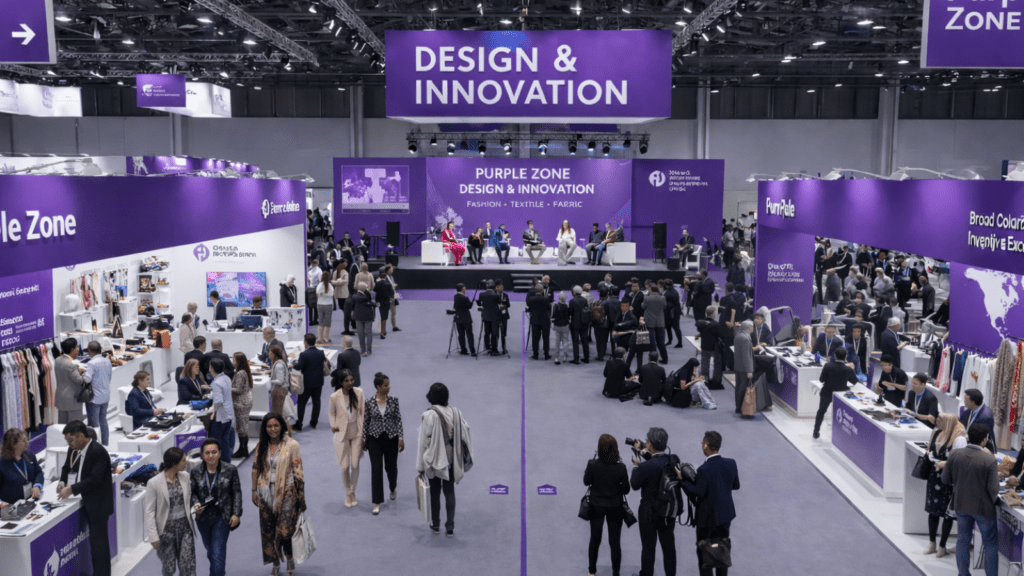
For brands, the Purple Zone serves as a strategic platform. It is a space to test ideas, benchmark design standards, and understand how creativity translates into commercial viability across borders. For designers, it offers exposure to buyers, manufacturers, investors, and collaborators who are looking for more than surface-level novelty. They are looking for design systems that can travel, adapt, and endure.
Collaboration sits at the center of this zone. Cross-border design partnerships, shared innovation frameworks, and dialogue between creators and industry leaders form its foundation. The Purple Zone encourages exchange between traditional craftsmanship and advanced design tools, between local insight and global ambition.
At the BRICS+ Fashion & Lifestyle Summit, the Purple Zone signals a clear shift. Design is no longer positioned as a supporting function. It stands at the forefront of industry transformation. It influences supply chains, brand identities, sustainability strategies, and market entry decisions.
The Purple Zone is where BRICS+ design steps into global competition with intent. It is where creativity meets innovation without dilution. It is where designers and brands connect not around trends, but around futures they are actively building.
At BRICS+, design does not follow the world. It helps shape what comes next.